Individually hand printed and hand coloured lino prints
Limited Edition. The Process
Individually hand printed and hand coloured lino prints
Limited Edition. The Process
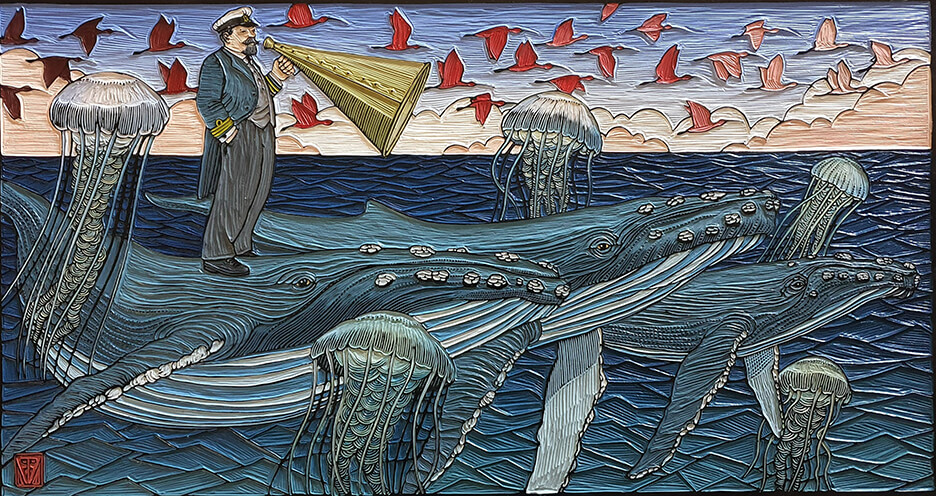
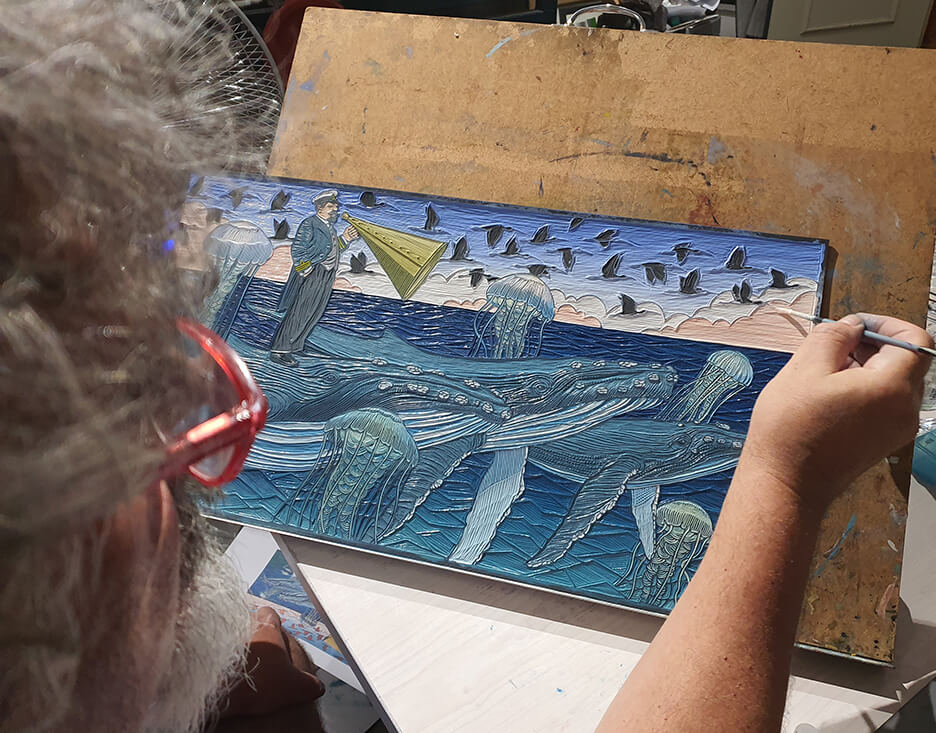
Original Lino Block in Oil
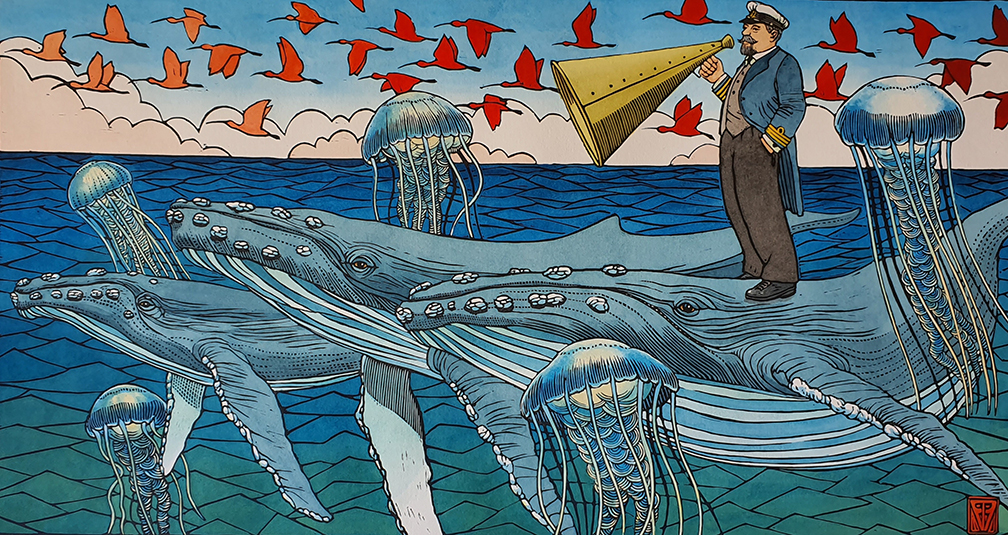
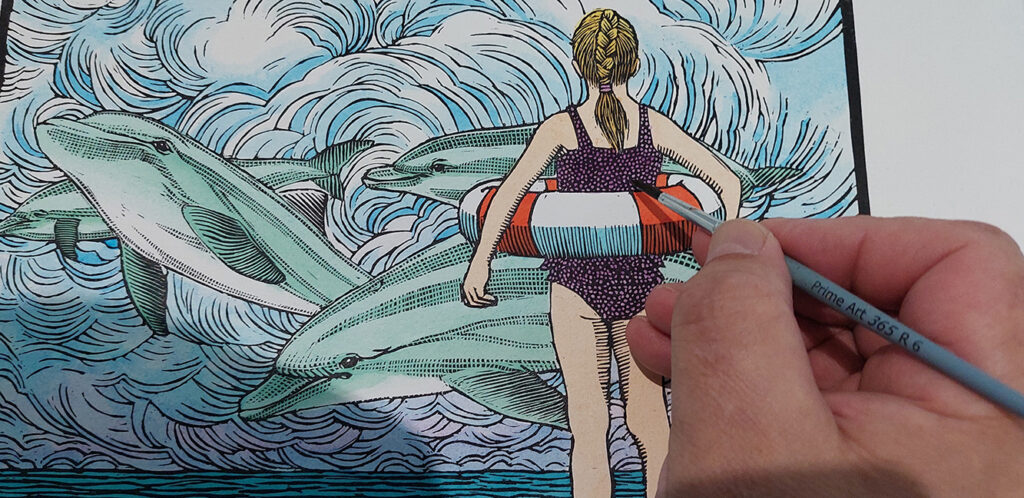
Lino Print hand coloured with acrylic ink
Materials used are of the highest quality. Paper (285g) is imported from Fabriano in Italy. The inks used are imported from Bracknell in the UK.
I spend a long time planning and conceptualising the artwork before transferring the image to the lino block. I transfer my image with pen onto the lino and then cut my image with a lino cutting tool. Once done I first prepare my paper by soaking it in water to make it softer to take the ink better. Just before I print I will take it out of the water and dry it with a towel. I then roll my lino block with an oil based ink using a roller.
I place my paper onto the inked lino and hand print it using the spooning method.
Once dry I will colour the artwork with acrylic ink. I limit my amount of prints to 10 or 15 to make it more exclusive.
The original linocut is finished in oil paint and sold. This also makes the prints more exclusive as I cannot reprint a second edition.
My entire process is done by hand and each and every lino print are individually hand coloured by me.
Step by Step Process in Images
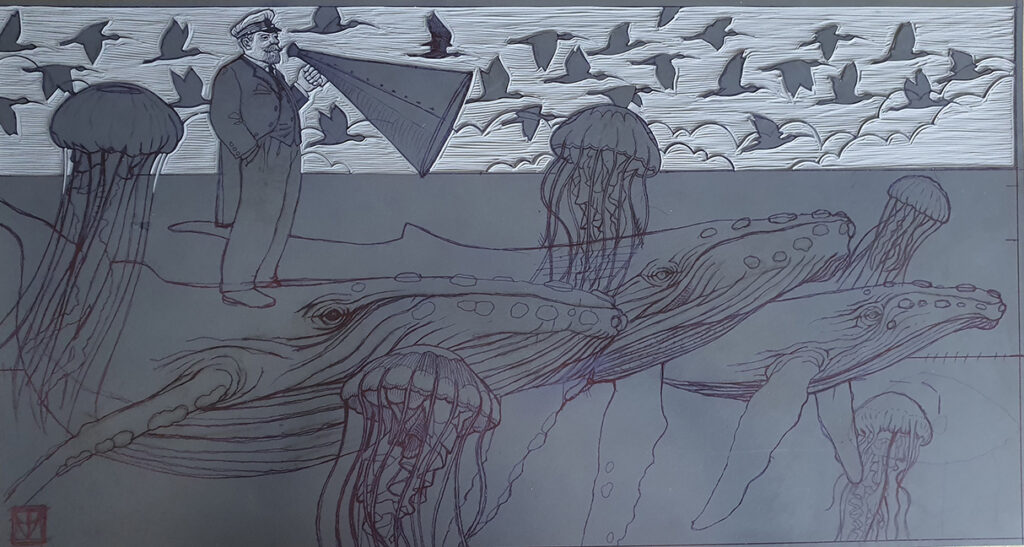
Step 1: Conceptualise artwork and draw image on the lino block with pen.
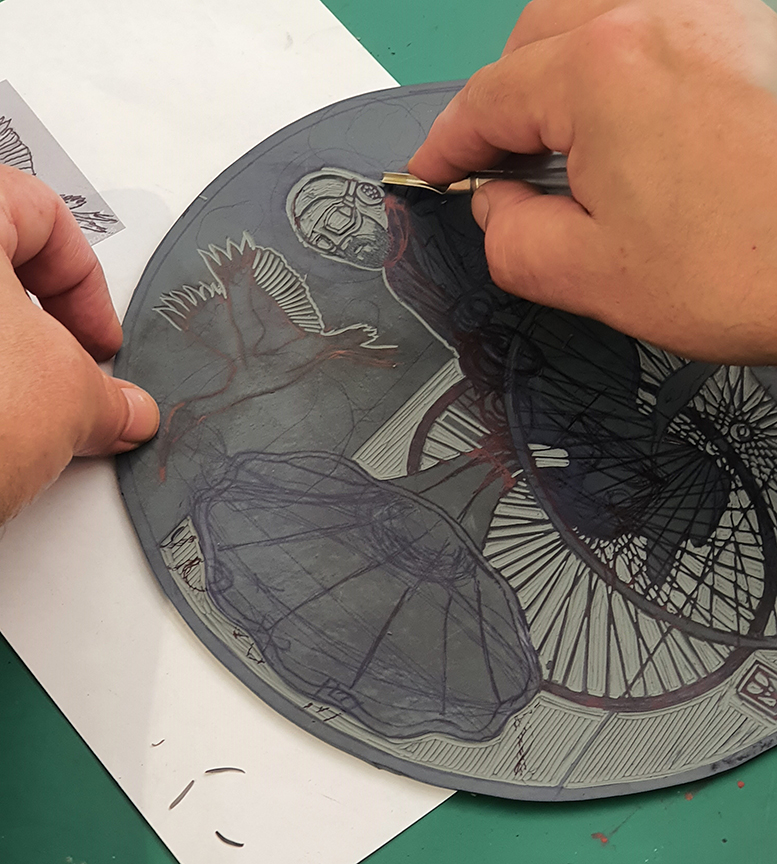
Step 2: Cutting the lino with a lino cutting tool. The finer the detail the longer it takes me to cut the work. Size also plays a role.
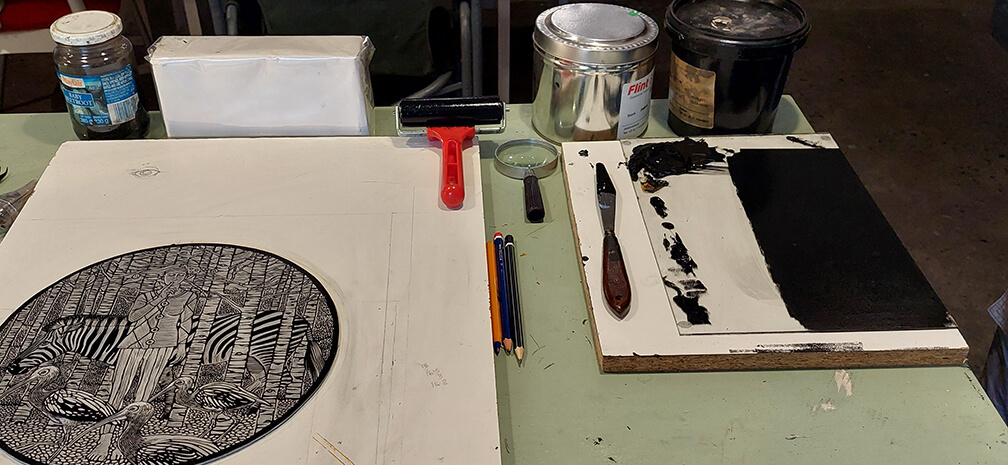
Step 3: Preparation for the printing process and registration of lino. I use an oil-based ink for my printing and print on Fabriano 50% Cotton 280 grams. Everything by hand.
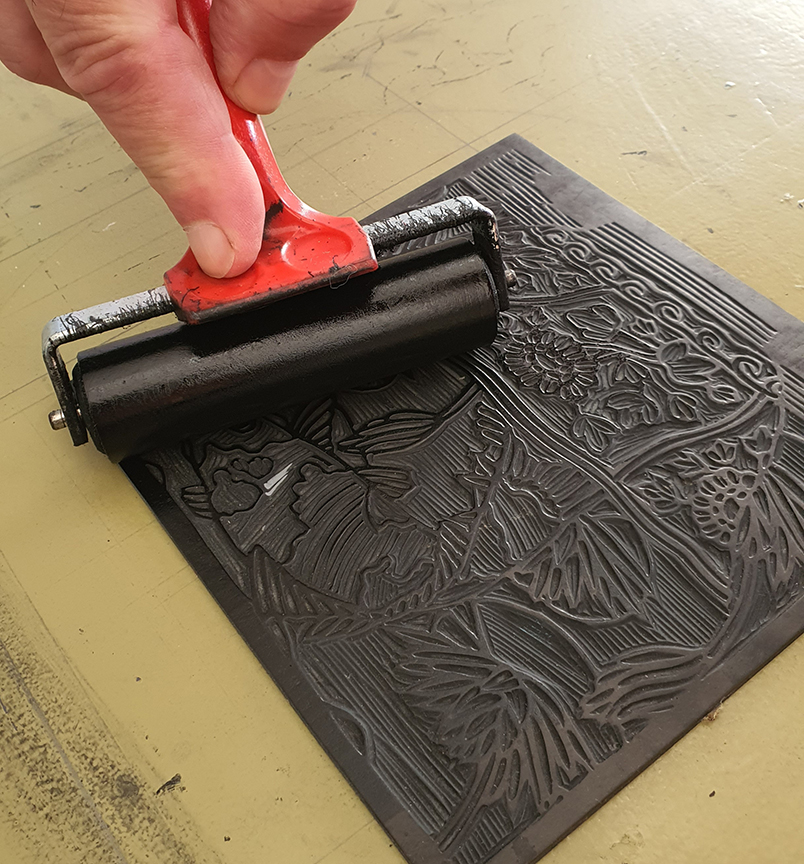
Step 4: Rolling ink on the lino block to print
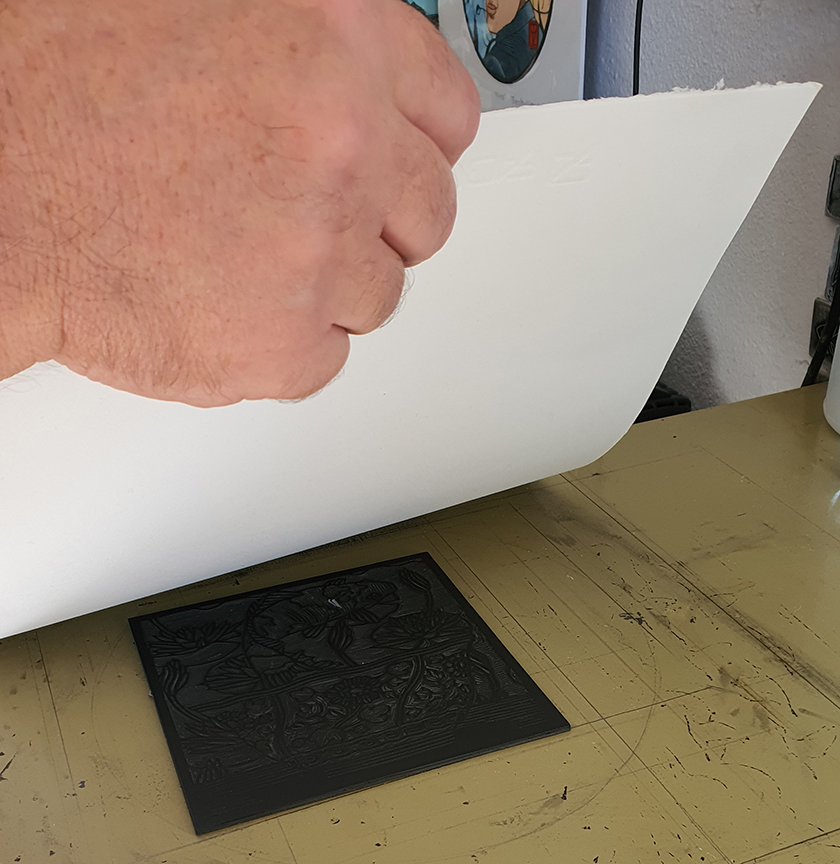
Step 5: Placing the paper on the lino block to print
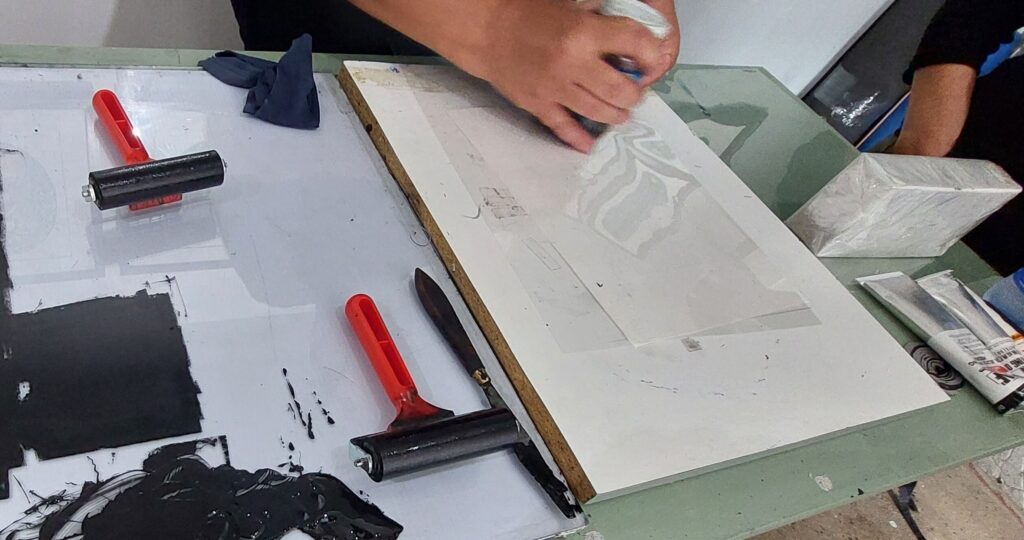
Step 6: Pressure must now be applied by a method referred to as the spoon method. In the photo I use a glass bottle but traditionally a Baren is used.
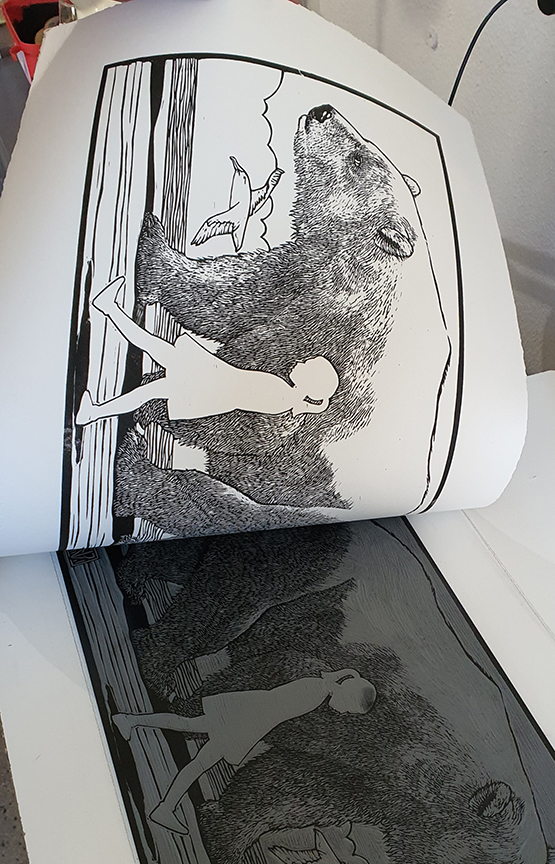
Step 7: Paper is lifted to check the quality of the print. Sometimes adjustments to the ink and even further cutting must be made to get the print perfect.
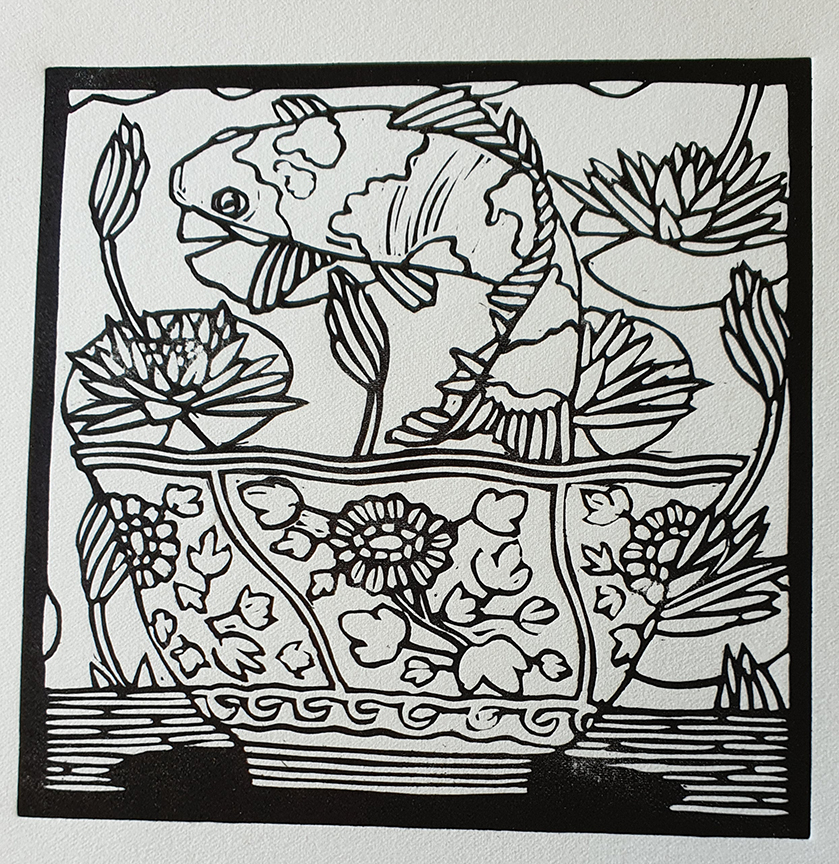
Step 8: Black and white print is then left to dry for the colour process. I mostly print an edition of only 10 but sometimes also 5. This keeps the work exclusive.
Step 9: The prints are now individually painted by hand with acrylic ink.
10. The final part of my process is now to paint the cut lino block with oil paint. It is then sold as an oil painting. It is highly sought after and a collector’s item.
This again ensures the exclusivity of the work as no further black and white prints can then be made.